Roasting is where a coffee is revealed, or lost.
Most of us choose a coffee by where it's from: a sweet Colombian, a floral Ethiopian. The roast decides how much of that reaches the cup.
We roast to reveal what's already in a coffee, never to cover it. Some, like our House coffees, we take a little further for sweetness and body in milk, but never so far that the roast is what you taste. We owe that to the people who grew it, and to you.
From those who roast coffee, for those who drink coffee. All under one roof.
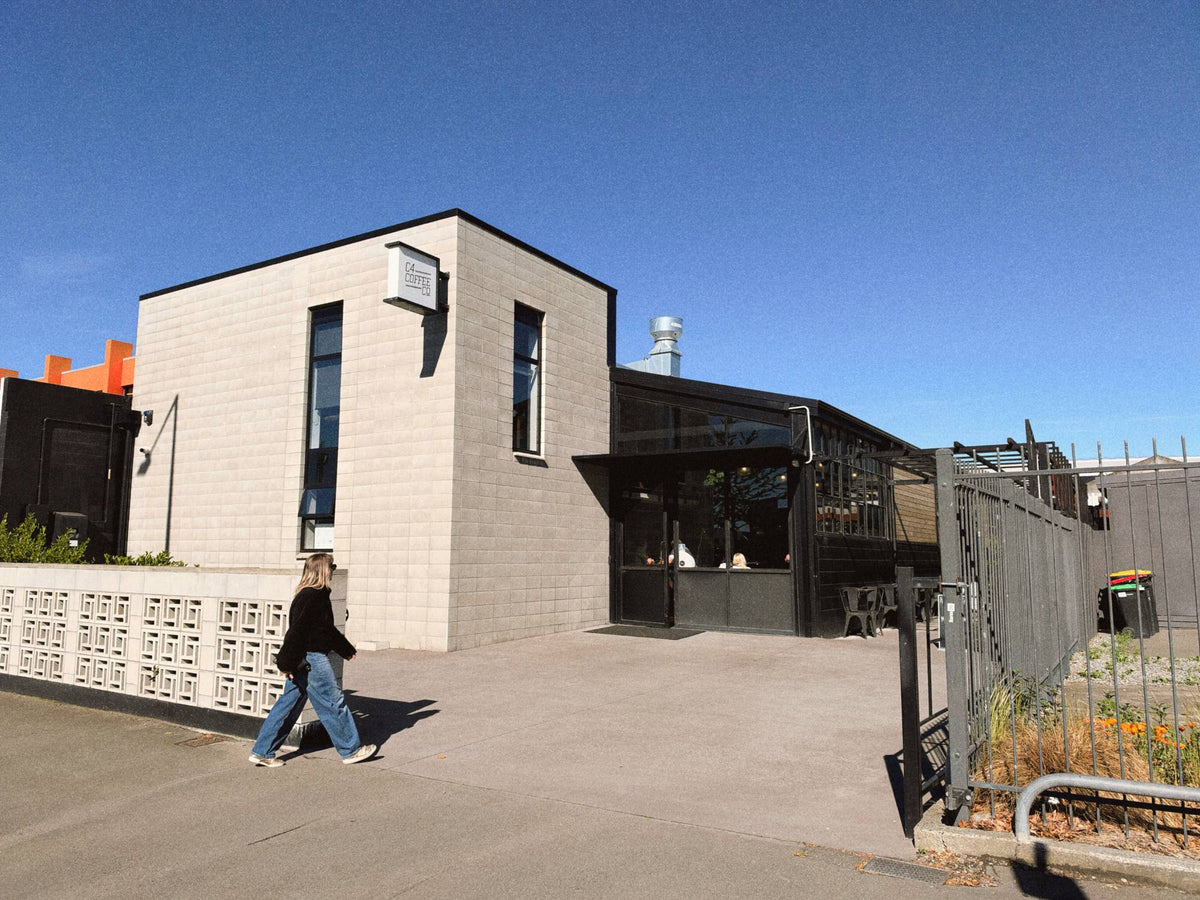
An espresso machine may be the beating heart of most cafés; a Loring happens to be ours. Whichever seat you choose, you'll see the team roasting, cupping, packing orders and servicing machines through the day. One building for everything we do with coffee, with room for you in it.
Something for everyone. Nothing bought on price.
Everyone has a coffee they enjoy more than others, and believes that's how coffee is meant to taste. We're guilty of it too. So we buy for range: something for almost everybody, from the classics to the rarest lots we can find.
We buy from growers and exporters we've known for years, never because a coffee is the cheapest available.
Roasting follows: no house style, one profile for each coffee, made to show what that coffee brings.
- Roast time
- 8:17
- Drop temperature
- 211°C
About this roast
Colombia, El Oasis. Washed Pink Bourbon.
Roasted for conical filter, on our 15 kg Loring.
22 October 2026. Roast PR-13682.
Decided at the cupping table.
Every new coffee starts on our 200 g ROEST. We sample-roast it, cup it, and settle its profile at the cupping table, then taste and adjust it again each harvest.
A washed Ethiopian for filter is treated nothing like a yeast-inoculated natural for espresso. Each is roasted for how it will be brewed: kept light for clarity and sweetness, taken a touch further for espresso and milk, never so far that you taste the roast.
This washed Pink Bourbon from El Oasis, in Colombia, was roasted for conical filter brewers.
Cupped before it's named.
We cup every coffee, write down what we taste, and list its notes strongest first, so the first is the one you'll notice.
The notes start from the SCA flavour wheel, then get more specific: the words that fit this coffee, tasted the way it's meant to be brewed. Each keeps its place on our wheel, in its family, and the colour on the label is its lead note's.
Point at a colour to find the Pink Bourbon's notes on the wheel.
El Oasis Pink BourbonClarity
Roasted for conical filter. Tasted as a filter, and at the cupping table.
All our flavour families
- Cocoa Dark Chocolate, Milk Chocolate, Cacao Nib, Hazelnut
- Smoky Tobacco, Cereal, Toasted, Ashy
- Floral Jasmine, Rose, Chamomile, Black Tea
- Fruity Berry, Dried Fruit, Tropical, Stone Fruit
- Citrus Lemon, Orange, Grapefruit, Lime
- Sweet Caramel, Honey, Brown Sugar, Vanilla
Worth the wait.
Coffee keeps releasing gas for days after roasting, and brewed too soon it tastes sharp and hollow. Give it about two weeks for espresso, four for filter. Pop in your roast date to see when yours is ready.
Espresso
Resting for 14 days, then at its best
Filter
Resting for 28 days, then at its best
We roast in small batches through the week. Your coffee is at its best inside the window above, and still good after it, just quieter.
To keep it longer, freeze it: vacuum-sealed, or in our bag with tape over the valve. Keep it dry, and take it out only when you're ready to defrost and use it, since each time out lets in moisture.