

Indonesia
Natcha Lot 3
$65
Why altitude matters
Higher farms grow slower, denser coffee, usually brighter and more complex.
Coffee grows in the tropics, and the higher it's planted the cooler the nights. Cooler air slows the cherries as they ripen, so the seeds inside build more sugars and acids before they're picked. That usually means a denser bean and a livelier cup: more fruit and florals up high, more chocolate and nuts lower down.
It's a guide, not a rule. Distance from the equator, shade and soil change it too, which is why the same height can taste different in Brazil and in Ethiopia.
1360 m: Higher than Te Ahu Pātiki / Mount Herbert, Banks Peninsula (919 m), lower than Ben Lomond, Queenstown (1748 m).
Varieties
An Indian Arabica bred for yield and rust tolerance, widely planted across Indonesia’s highlands.

Sigararutang, from Timor Hybrid
An Indonesian variety from a cross with Timor Hybrid, known for fruiting early and heavily.
Caturra, from Bourbon
A compact natural mutation of Bourbon, found in Brazil.
How we roast it
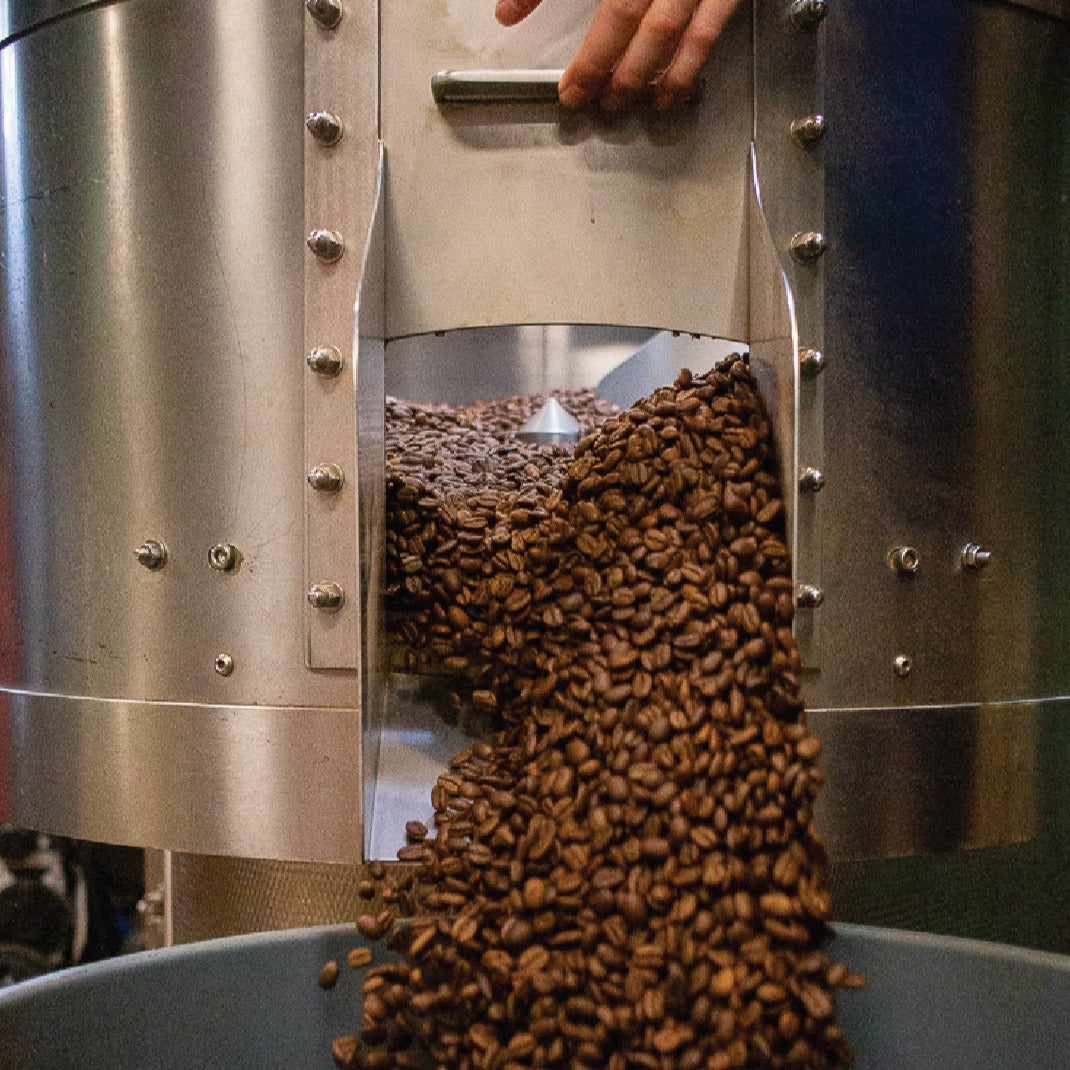
Light, roasted for filter.
Vibrant, process first
Fermentation or drying has amplified the fruit, and that leads the cup.
Roasting turns a hard green seed into something you can brew. Lighter roasts keep more of the coffee's own acidity and fruit; darker ones trade it for body, caramel and cocoa, and stand up well to milk.
We check the colour of every roast with an Agtron reading: the higher the number, the lighter the roast.
How it was processed
Carbonic Maceration, Wine Yeast Inoculated, Lactobacillus fermentation, Red wine yeast 24-hour Lactobacillus finish.
NATCHA’s own carbonic maceration: a dry heat shock, 90 hours of cold fermentation without oxygen with a red wine yeast, then a 24-hour Lactobacillus finish.

-
Picked and selectedHand-picked; only cherries at 21 °Brix and above, kept separate by lot

- Thermal shockA dry heat stage at 65 °CAbout 6 hours
- RewettedRehydrated after the heated stage, to the lot’s protocol
-
PulpedThe wet parchment, skins and pulp all go on into the sealed tank
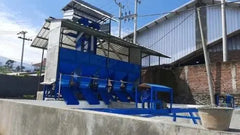
- Cold carbonic fermentationSealed with no oxygen, with a red wine yeast, in stages between 3 and 16 °C. No wine is added; 0% alcohol90 hours
- Lactobacillus finishLactic bacteria for the last hours of the ferment24 hours
-
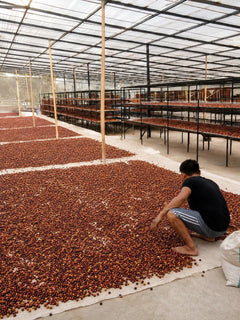
DriedControlled drying at 45 °C, to 12–13% moisture
- Hulled and sortedWet-hulled, sorted by density, colour and by hand, then cupped blind before release

In the cup Aromatic and layered, with a long finish: the process leads the cup by design.
More about Carbonic Maceration, Wine Yeast Inoculated, Lactobacillus fermentationAsk about availability We'll check stock and timing for you
Roasted in ŌtautahiIn stock at C4 HQ
Led by mango nectar, a fruity note. How we taste
The most prominent note leads
We list notes as they stand out, the most prominent first. Each sits in a family, from the broad group out to the specific note, as on the SCA Coffee Taster's Flavor Wheel.
All our flavour families
- Cocoa Dark Chocolate, Milk Chocolate, Cacao Nib, Hazelnut
- Smoky Tobacco, Cereal, Toasted, Ashy
- Floral Jasmine, Rose, Chamomile, Black Tea
- Fruity Berry, Dried Fruit, Tropical, Stone Fruit
- Citrus Lemon, Orange, Grapefruit, Lime
- Sweet Caramel, Honey, Brown Sugar, Vanilla
Brewed as filter, the most prominent note we tasted was mango nectar, in fruity.
Every coffee brews every way
Brew any of our coffees any way you like. Its notes are what we taste brewed the way we built it around; another way brings out others.
Washed Clarity coffees change the most between methods. Coffees whose processing has brought a flavour forward, like a co-ferment, hold it however you brew them.
A note is what we taste
A tasting note is a flavour we find in the cup: at the coffee's age on the day, on our water and recipe. We add no flavourings, and notes are never ingredients or allergens. Taste it weeks later, on other water or another brewer, and the notes will move. And a note is never the whole cup: two coffees can share one and taste nothing alike. A House coffee with citrus is still roast first, the citrus sitting inside a rich, rounded cup; in a Clarity coffee, the citrus is the cup.
- Mango Nectar, Tropical Juice & Macerated Strawberries Fruity
Vibrant. Anaerobic, aerobic, slow sun-dried, barrel-fermented, fruit-macerated. Coffees where processing has unlocked and amplified flavour. Powerful fruit-forward, crafted for adventurous espresso drinkers and funky filter fans.
Roast Light Roasted for filter Why it matters
How we roast it
Lighter keeps more of the coffee's own fruit; darker brings body and chocolate.
Roasting turns a hard green seed into something you can brew. Lighter roasts keep more of the coffee's own acidity and fruit; darker ones trade it for body, caramel and cocoa, and stand up well to milk.
We check the colour of every roast with an Agtron reading: the higher the number, the lighter the roast.
Mt. Papandayan
Mt. Papandayan
Mt. PapandayanNatanael CharisMore about Natanael Charis
NATCHA Lot 03 comes from producer groups on Mt. Papandayan, West Java, at 1,360 m. Natanael Charis’s NATCHA processed it in Pangalengan: a dry heat shock at 65 °C, 90 hours of cold carbonic maceration with a red wine yeast, then a 24-hour Lactobacillus finish. No wine is added and the finished coffee has no alcohol.
- Altitude
- 1360 m About 4 Sky Towers stacked.Why it matters
Why altitude matters
Higher farms grow slower, denser coffee, usually brighter and more complex.
Coffee grows in the tropics, and the higher it's planted the cooler the nights. Cooler air slows the cherries as they ripen, so the seeds inside build more sugars and acids before they're picked. That usually means a denser bean and a livelier cup: more fruit and florals up high, more chocolate and nuts lower down.
It's a guide, not a rule. Distance from the equator, shade and soil change it too, which is why the same height can taste different in Brazil and in Ethiopia.
1360 m: About 4 Sky Towers stacked.
C4 Brew Guide
The recipes we use every day at our roastery café, simple on purpose: water, ratio, grind. Treat them as a starting point, and adjust to what you taste and what your equipment gives you.

How we'd brew it.
- 0:00 Pour to 50 g at 8 g/s
- 0:30 Pour to 100 g at 8 g/s
- 1:00 Pour to 250 g at 3 g/s, very slow
- 2:30–3:00 Done


- 0:00 Pour to 50 g at 8 g/s
- 0:30 Pour to 120 g at 8 g/s
- 1:00 Pour to 190 g at 3 g/s, very slow
- 1:30 Pour to 250 g at 3 g/s, very slow
- 2:30–3:00 Done
For most grinders and most machines. Balanced, and as good black as with milk. Longer than the classic 1:2: at our roast level, 1:2.5 extracts fully and balances the cup, opening it up without thinning it.


A longer ratio at lower pressure, over a shorter shot, for more clarity and acidity.
A note on equipment. 1:3 relies on flat burrs that grind very evenly. On an E65, E80 or Mythos it often tastes watery; if it does, go back to 1:2.5.
Brewed on


- Pre-infusion 2 bar, about 1–2 g/s until the first 1 g (20–40 s)
- Extraction 6 bar, about 5–6 g/s to 18 g
- Post-infusion 2 bar, about 1–2 g/s to 54 g
- 40 s to 1:20 Done
For machines with pressure or flow control: three stages.
Brewed on


Water
Nearly all of the cup is water, and what's in it changes from city to city and season to season.
If your tap water is hard (above about 150 ppm), brew with a soft bottled water nearer 50 ppm; too soft is better than too hard.
If a cup tastes flat or chalky whatever you change, check the water before the recipe.
Adjusting a recipe
These are starting points: keep them simple (water, ratio, grind), then adjust to taste and to your kit.
If a filter tastes thin, dry or harsh, add a gram or so of coffee (15 g to 16–16.5 g) and keep the water the same.
If a long espresso tastes watery, shorten the ratio (1:3 to 1:2.5) before you change the grind.
Taste every shot: how it looks coming out says little about how it tastes, and skimming the crema off often makes a light-roast espresso sweeter.
Keeping it fresh
Coffee keeps best sealed, cool and dark, and frozen keeps longest.
Seal single doses and freeze them; grind straight from the freezer, and don't thaw and refreeze.